What if coordinating your workforce were part of planning the activity programme, rather than a separate admin task? When staff assignments are spread across busy schedules and multiple locations, it can be harder to see who is responsible for each session and keep delivery organised. Sports staffing software brings these moving parts into a clearer view. When scheduling, workforce oversight and activity management sit in disconnected processes, expanding a programme can add complexity instead of control.
Activities depend on assigning the right people to the right sessions. This guide explains how sports staffing software can support that work, which capabilities to compare with your scheduling and deployment needs, and how connected staffing and activity management can help coordinate delivery as your programme grows. We’ll look at session assignments, workforce tracking and oversight across locations, then consider how a specialist staffing application can fit into a wider platform for managing bookings and activities. The aim is to give you a practical way to assess your current process and identify what your team needs next.
Key Takeaways
- See why growing activity programmes need a clearer way to coordinate staff across changing schedules and locations.
- Trace how planning sessions, assigning staff and tracking workforce deployment can improve operational oversight.
- Use your activity types, session patterns and current pinch points to guide your sports staffing software evaluation.
- Compare tools by how well they support the way your organisation schedules and oversees its workforce.
- Explore how Coordinate Sport connects staff assignments and workforce tracking with wider activity management and online booking.
Why sports staffing software matters as activity programmes grow
A small programme may be manageable through conversations and a shared spreadsheet. As sessions multiply, schedules change and activities run across several locations, managers need a reliable view of what is happening, who is assigned to each session and where the workforce is deployed.
Sports staffing software helps organise staff assignments and oversee workforce deployment across an activity programme. It does more than record dates and times in a digital calendar. A calendar can show when a session takes place. A staffing system connects the session with the people assigned to it, giving managers a clearer operational view of how the programme is staffed.
This is part of a wider move towards digital administration in sport. The Youth Sports Automation overview describes platforms that bring together functions such as rostering, scheduling, registration and communication. For activity providers, connecting workforce organisation with programme information can make day-to-day oversight more coherent.
What does sports staffing software help an activity provider manage?
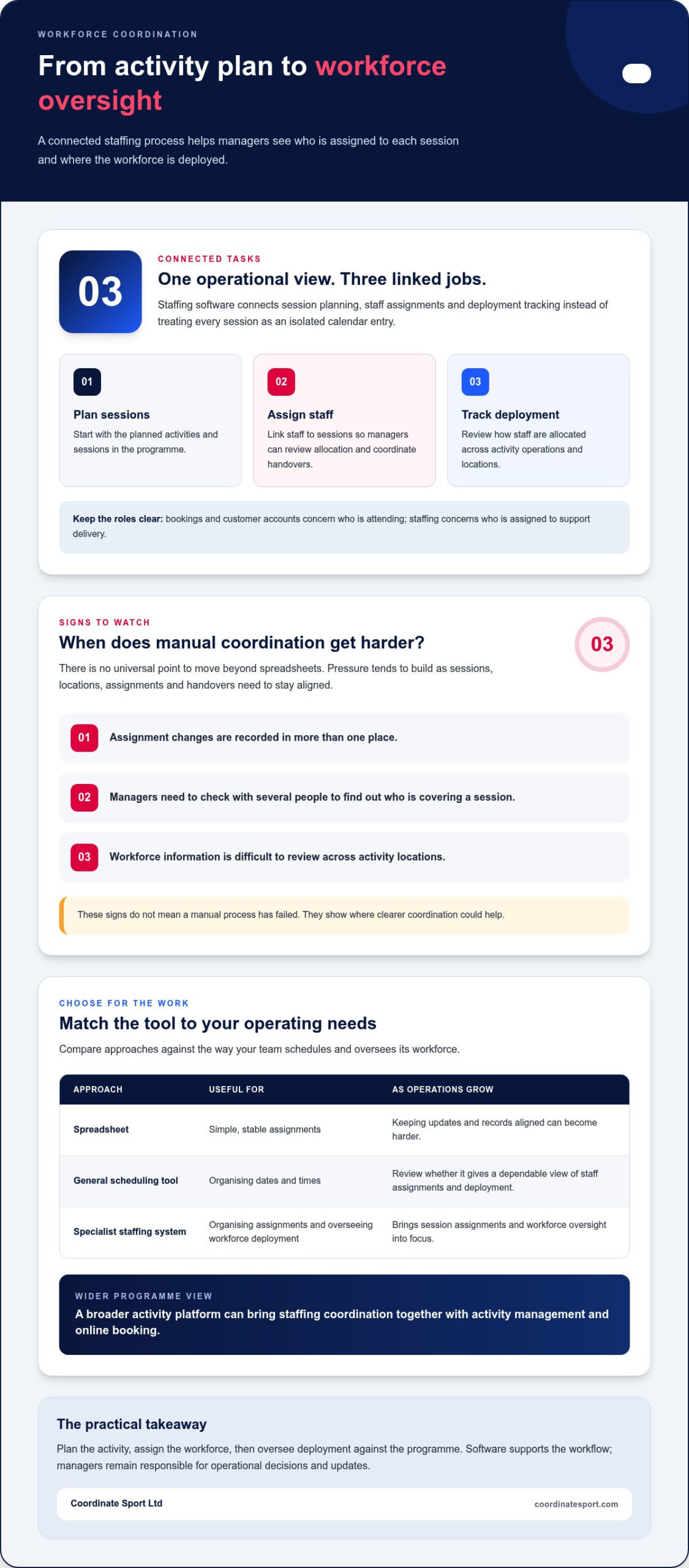
A staffing application supports three connected tasks: scheduling coaching staff, assigning them to sessions and tracking workforce deployment. With those details organised together, managers can review how staff are allocated across the programme instead of piecing together updates from separate records.
For example, if a session changes, the related staff assignment may need reviewing too. Keeping the programme and assignment information visible in one operational process helps managers identify where coordination is needed and communicate changes clearly. The application organises the workforce. It does not deliver coaching or replace the judgement of the people managing activity delivery.
When does a manual staffing process become difficult to scale?
There is no universal point at which a provider must move beyond spreadsheets. A straightforward programme with few changes may be manageable manually. Pressure tends to build when more sessions, locations, staff assignments and handovers need to stay aligned.
A spreadsheet can be useful, but multiple copies, locally saved updates or changes shared through separate messages make it harder to know which information is current. Managers may spend time reconciling records instead of reviewing deployment. Watch for signs such as:
- Assignment changes are recorded in more than one place.
- Managers need to check with several people to find out who is covering a session.
- Workforce information is difficult to review across activity locations.
These signs do not mean a manual process has failed. They show where clearer coordination could help. As programme operations expand, a shared system for assignments and workforce oversight can give managers a firmer view of delivery and a more organised foundation for growth.
How sports staffing software supports session planning and workforce oversight
Workforce coordination follows the shape of the activity programme. Managers plan sessions, organise staff assignments, then review how people are deployed as delivery takes place. A clear process helps operational teams work from consistent information, particularly when activity plans change. Plan the activity, assign the workforce, then oversee deployment against the programme. Software supports this workflow, while managers remain responsible for operational decisions and updates.
From programme planning to staff assignment
Start with the planned activities and sessions, then organise staffing assignments around them. Make it clear which staff are linked to which parts of the programme, so managers can review allocation and coordinate handovers using a shared operational view. This is workforce coordination, not participant booking. Bookings and customer accounts concern who is attending; staffing concerns who is assigned to support delivery.
What workforce tracking adds to operational oversight
Tracking workforce deployment helps managers see how staff are allocated across activity operations, including when delivery spans multiple locations. That broader view can support decisions about coordination and programme organisation. Specialist sports staffing software brings assignments and workforce oversight into focus, rather than treating each session as an isolated calendar entry. For practical guidance, see how to manage staff across activity locations.
When can spreadsheets or general scheduling tools be enough?
A small, stable programme may be straightforward to manage with a spreadsheet or general calendar. These tools can work when assignments change infrequently and managers can keep information aligned. As sessions, handovers or locations increase, it can become harder to maintain a dependable view across separate records. Reassess your process if checking staff deployment takes repeated effort or updates are difficult to keep consistent.
Which capabilities matter in a specialist staffing system?
Compare tools against the work your team needs to coordinate. Prioritise the operational essentials, then consider how staffing fits with the wider programme processes you manage. A broader activity platform may suit your organisation if you want staffing coordination alongside activity management and online booking, rather than separate workflows.
| Approach | Useful for | Consider as operations grow |
|---|---|---|
| Spreadsheet | Simple, stable assignments | Keeping updates and records aligned |
| General scheduling tool | Organising dates and times | Visibility of staff deployment |
| Specialist staffing system | Session assignments and workforce tracking | Fit across activity locations and programme needs |
Coordinate Sport’s staffing application is designed for sports activity providers. It supports session assignments, workforce tracking and deployment across multiple locations. The wider platform also brings staffing into the context of activity management and online booking. If connected workflows match your operational needs, explore Coordinate Sport’s activity platform.
How to evaluate sports staffing software for your organisation
Choose a system by starting with the work your team needs to coordinate, not with a long feature list. A useful evaluation reflects your activity types, session patterns, workforce and locations. It also addresses the points where information is currently difficult to manage, so you can compare options against real operational needs.
Use this sequence to shape your requirements before assessing sports staffing software:
- Map your activities. Note the kinds of programmes you run and how sessions are arranged. Consider whether schedules follow a regular pattern or change throughout the programme.
- Describe your staffing workflow. Record how staff assignments are made, updated and shared. Identify recurring handovers or checks that take time or make responsibilities unclear.
- Pinpoint the pressure points. Look for duplicated records, assignment changes that are easy to miss, or difficulty seeing where staff are deployed. Focus on outcomes such as clearer assignments and stronger workforce visibility.
- Account for operational scale. Consider session volume, workforce size and how many activity locations managers oversee. The aim is not to buy for an imagined future, but to understand whether your current process can keep pace with planned growth.
- Rank what matters most. Separate essential needs, such as session assignments and deployment oversight, from optional capabilities. This makes it easier to judge whether a system addresses the problems affecting your programme today.
Define the staffing challenges the system must address
Make your evaluation specific. If staff assignments are straightforward at one location but harder to oversee across several, visibility of deployment across locations may be a priority. If the main difficulty is keeping session information consistent as plans change, assess how the workflow supports clear assignments and shared oversight. A short list of real coordination tasks gives your team a practical basis for comparing solutions.
Assess fit with your wider activity operations
Staffing does not sit apart from the programme. Consider how workforce coordination relates to activity management and processes such as booking and participant account management. These are distinct tasks, but a provider may benefit from managing them within a broader operational platform. A dedicated staffing tool may suit a focused workforce requirement; a wider platform may better match organisations seeking connected activity and booking operations. Base the choice on workflow fit, not on an assumption that more features always deliver more value.
Set realistic adoption goals as well. Decide which coordination process you want to make clearer first, who needs to use the system and what a useful operational view would look like. Keep the scope grounded in your requirements rather than assuming integrations or implementation services.
Coordinate Sport’s platform combines a specialist staffing application with activity management and online booking. It supports session assignments, workforce tracking and deployment across multiple locations. Explore Coordinate Sport’s platform as you assess the fit for your organisation.
Coordinate sports staffing with Coordinate Sport’s activity platform
Once you have defined the coordination challenges to address, compare them with the platform’s practical scope. Coordinate Sport provides a specialist staffing application designed for sports activity providers. It supports the organisation and scheduling of coaching staff, session assignments, workforce tracking and deployment across multiple activity locations. These capabilities give providers a focused way to consider how staff coordination could fit into their operational setup.
The right choice depends on how your team manages activity, not simply on the number of functions a platform offers. Start with the processes that matter most: how you organise sessions, make staffing assignments, oversee deployment and manage bookings. Then consider whether you want staffing to sit alongside wider activity operations in the same platform.
Bring staff coordination into the wider activity workflow
Staffing is one part of a programme’s operating rhythm. Coordinate Sport’s wider platform also supports activity management and online booking, alongside participant accounts, payments and reporting. These capabilities can help providers consider workforce coordination in the context of their wider activity operations.
Keep the roles clear. Booking and participant account processes concern registration and attendance; the staffing application supports workforce organisation. They relate to different parts of activity management, but the software does not deliver coaching or guarantee a particular operational result. Its value depends on how well its capabilities match the work your organisation needs to manage.
Plan a practical next step towards better workforce oversight
Before choosing a platform, map your current staffing workflow from session planning through to assignment and oversight. Note where information is held, which handovers need attention and whether managers need to review deployment across more than one location. Use that map to keep your evaluation grounded in your programme, rather than being distracted by features that do not address a real need.
As you assess a solution, check whether its capabilities reflect your priorities:
- Organising staff schedules around planned activity.
- Making and reviewing session assignments.
- Tracking workforce deployment across activity locations.
- Considering staffing alongside activity management and online booking.
These are practical points of comparison, not a promise of automatic changes or a substitute for operational decisions. Set a clear first objective, such as gaining a more consistent view of assignments, then consider how the platform’s wider capabilities relate to your activity operations. That gives your team a measured route from identifying a coordination gap to assessing a relevant software option.
Coordinate Sport brings a sports staffing application together with activity management and booking capabilities in a wider platform. Explore how its capabilities align with your workforce and programme needs. Explore Coordinate Sport.
Set your next operational priority
Turn your staffing priorities into a clear direction for the programme. Choose one area where better coordination would make the biggest difference, then use it to guide your assessment of sports staffing software. A focused starting point helps your team judge whether a platform fits the way you organise activity now and the way you intend to grow.
Coordinate Sport offers a specialist staffing application designed for sports activity providers, supporting session assignments, workforce tracking and deployment across multiple activity locations. These capabilities sit alongside activity management and online booking, giving providers a platform to consider across connected operational needs.
Build your next decision around the level of oversight your managers need and how staffing fits with the rest of your activity operations. Clear priorities make it easier to move from coordination challenges towards a more organised approach, without losing sight of what works for your team.
Explore Coordinate Sport’s platform to see how its staffing, activity management and booking capabilities could support your operations. Start with the workflow you most want to coordinate more clearly.
Frequently Asked Questions
What is sports staffing software?
Sports staffing software helps organisations plan and oversee the people assigned to sports activities. It gives managers a structured way to organise staff schedules and session responsibilities, rather than relying on separate notes or calendar entries. When evaluating a system, consider whether it supports the workforce tasks your team handles, such as coordinating assignments and reviewing deployment as the programme changes.
Who uses sports staffing software?
Sports staffing software is used by organisations responsible for coordinating the workforce behind organised activity. This includes sports clubs, activity providers and teams managing sessions, courses, camps or events. For example, a programme manager overseeing several types of activity can use it to keep staff coordination distinct from participant registration. The right fit depends on who manages assignments and how the organisation delivers its programme.
Can sports staffing software manage staff across multiple locations?
Some systems are designed to support workforce deployment across multiple activity locations. This is useful when managers need to consider staffing across a distributed programme rather than viewing each location in isolation. Coordinate Sport’s staffing application supports deployment across multiple locations. Assess whether that view matches how your organisation allocates staff and oversees activity across its sites.
How does sports staffing software differ from a spreadsheet?
A spreadsheet is a flexible way to record assignments and may be sufficient for a straightforward programme. Dedicated sports staffing software is built around workforce coordination, providing a purpose-specific way to manage staffing tasks. The practical difference depends on your process: consider how easily your team can keep records current, find assignment information and maintain a consistent view as activity plans change.
Does sports staffing software replace booking software?
Not necessarily. Staffing tools focus on organising the workforce, while booking software supports registrations, participant details and payments. They address different operational needs. Some providers choose a wider platform that includes both staffing and booking capabilities, allowing them to manage these workflows together. Coordinate Sport’s platform supports staffing alongside activity management and online booking, so providers can assess it against the scope of their operations.
How should an organisation introduce sports staffing software?
Begin by selecting a specific workflow to organise, such as assigning staff to a recurring set of sessions. Agree who maintains the information, who needs to refer to it and how the team will handle changes. Introduce the process to the people involved, then review whether it gives managers the oversight they need. Expand its use as your team establishes a consistent way of working.
How much does sports staffing software cost?
Costs depend on the provider’s pricing model and the platform’s scope. Before comparing options, identify whether charges include a subscription, platform fees or payment-related charges, and consider which functions your organisation needs. Coordinate Sport’s revenue model includes software subscription and platform fees. Compare the applicable pricing structure with your operational requirements.